My interview with Jared Diamond on The World Until Yesterday

Available now here.

Leave a Comment

Filed under Uncategorized

Here’s The Monthly Book for May – THE WORLD UNTIL YESTERDAY – JARED DIAMOND


How many times have you read about advanced industrial cultures like ours being in a state of crisis? In spite of breathtaking medical heroics and compared to small-scale traditional societies, we no longer know how to eat properly in order to keep healthy; we have forgotten how to care for our infants, feeding them with formula instead of letting them enjoy years of breastfeeding; and we are socially alienated, with our digital lives taking precedence over face-to-face human contact.

But is it fair to romanticise small-scale traditional societies? In some of these cultures it was traditional to kill babies who had been born as a twin or if they were too close in age to their siblings, making it hard for parents to hunt, gather and carry everything on their backs, including non-ambulant children. Sometimes old and infirm people who had reached the end of their productivity were abandoned or expected to remove themselves from the group and go off to die. Sometimes the cycles of payback for crimes meant generations of feuding and war.

The book I’ve chosen for us to discuss this month is Jared Diamond’s The World Until Yesterday

He marshals examples from many anthropological studies of small-scale societies and larger sociological studies of what he calls WEIRD (Western, educated, industrial, rich and democratic) societies to ask questions about the way humans have approached a series of situations. These include how to manage disputes from accidents and murders to wars over territory; how to bring up infants and young children; how to manage the infirm and old aged members of the group; different attitudes towards safety and danger; how we approach food and nutrition and deal with multiple health issues; and managing several languages and systems of belief.

Having set out the different approaches (natural experiments, in fact) that have been taken in small-scale societies and comparing these to our own, Diamond asks what they might have to learn from us and what we might learn from them.

Not without his critics, Jared Diamond has been accused of generalising from a small group of studies, and of assuming that small-scale societies represent the way that our hominid relatives lived from the dawn of time, as if they have not been evolving like the rest of us.

I’ve chosen this book because I’ve had a long interest in anthropology and geography and have been reading and interviewing Jared Diamond for many years. He is a fine communicator of complex questions, and he is addressing the kinds of questions that thousands of self-help books try to answer.
Jared Diamond is currently a professor of geography at UCLA. You might have read his 1997 blockbuster Guns, Germs and Steel: The Fates of Human Societies, for which he won the Pulitzer Prize. In that book he wrote about a question he’d been asked by a friend he made during his 50 years of fieldwork in Papua New Guinea, who wanted to know how why advanced technologies and differences in power favoured Diamond’s society and not his. In Guns, Germ and Steel Diamond was arguing that these differences didn’t arise from biological or even cultural factors but from where on the planet people happened to live and what was at hand for them to use: an environmental explanation for societal difference.

In his book Natural Experiments of History, a collection of essays co-edited with a professor of government at Harvard University, James A Robinson, who is an economist and political scientist, Diamond presented some case studies in “natural experiments”. This is a common approach in sociology, archaeology, anthropology, political science and economic history, which looks for two situations that are very similar but differ with respect to some variable of interest. One example is the effect of two different colonial powers – French and Spanish – on a single geographical location, the island of Hispaniola on which the Dominican Republic and Haiti sit side by side.
His is a transdisciplinary career. He started with a PhD in physiology and membrane biophysics, and then he specialised in ornithology, particularly in New Guinea, and he has for many years been an environmental historian, giving him a unique perspective from the cellular to the global in one working life.

Leave a Comment

Filed under Uncategorized

my interview with Nicolas Rothwell: Belomor – Books and Authors – Browse – Big Ideas – ABC TV

Nicolas Rothwell: Belomor – Books and Authors – Browse – Big Ideas – ABC TV.

Leave a Comment

Filed under Uncategorized

The Monthly Book Discussion: Craig Sherborne, RK and Erik Jensen on Coetzee

If you missed the live feed this week, you can watch writer Craig Sherborne discuss the book with me and Erik Jensen from Schwartz media here.

And here’s writer and philosopher Raimond Gaita discussing the philosophical aspects of the book with me too.

Leave a Comment

Filed under Uncategorized

The Childhood of Jesus – JM Coetzee | The Monthly

The Childhood of Jesus – JM Coetzee | The Monthly.


After a journey by a boat, then a tragic accident, a man arrives at the Centro de Reubicacion Novilla, a resettlement centre in a new country where he does not know the local language. With him is a young boy. We hear nothing of their pasts; new names are assigned to them – Simón and David. Fate has thrown them together.

We are mystified by how little help they receive from the bureaucratic workers at the resettlement centre. We, together with David and Simón, try to understand the signs and the rules. We also willingly invest in Simón’s quest to look for the boy’s mother. David has lost a piece of paper that might have explained all, and Simón has no real memory of his own past either. What is their story? Are they dead? Is this the afterlife?

I chose this as the first of our Monthly Books because from the very first page of JM Coetzee’s novel we are plunged into a world that is both familiar and unfamiliar. As the book is written in the present tense, the time and place are uncertain. It is a story that is asking to be unfurled.

In this strange and utterly compelling tale, we are presented with part fable, part quest. Yet at the heart of the book is philosophical inquiry. The Childhood of Jesus brings to mind many questions:

What are our appetites for, if not to tell us what we need?
What is human nature? Does sex bring men and women closer?
Why is Simón continually asking himself questions instead of just living, as he imagines everyone else does?
Is the price of making a new life by forgetting the old one too high?
Does David need Simón, a stranger, more than he does his “mother”?
What is the meaning of work, of education and of the story?
Why is it called “The Childhood of Jesus”?

JM Coetzee has always written novels that ask us to think deeply.

In Elizabeth Costello he asked us to think carefully about our relationships with animals. In Disgrace we were asked to think about ourselves as animals with drives and needs, and about the realities of politics and history and our lived experiences.

A few years ago, the philosopher Peter Singer co-edited JM Coetzee andEthics: Philosophical Perspectives on Literature, and he says that Coetzee has a critique of philosophers like him, who argue rationally. Coetzee wants us to engage in a different kind of thinking – one that has a broader conception of reason and which includes emotional thinking in some way.

In this novel we do our thinking easily because the story Coetzee tells traps us with its tender notes: we are compelled to journey to the last station with David and Simon, to see where all of us arrive.

I’d love to hear what you think of the book. You can start by posting questions in the comments section below, which I will answer in a live video session with special guest Craig Sherborne – author of Hoi Polloi andThe Amateur Science of Love - here on 30 April at 8pm.

Leave a Comment

Filed under Uncategorized

On Turning

This is my essay commissioned by Hannah Mathews for her Action/Response project for Dance Massive. Ten artists used the essay as an inspiration for their own works, to be performed in the streets of North Melbourne on Friday 22nd March, 2013. I’m looking forward to seeing what they have imagined and made. 


On Turning

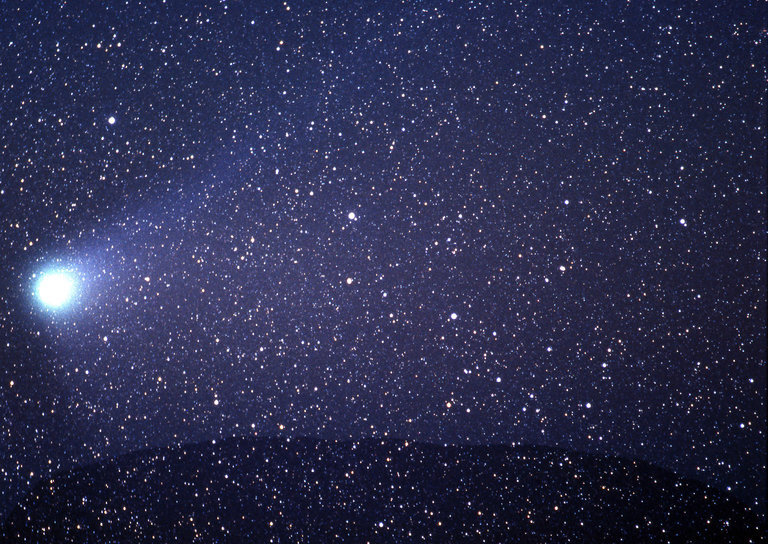
Here on the third planet orbiting elliptically around our sun, in a solar system circling the central core of the Milky Way galaxy twenty-five thousand light years away, we forget we are moving at speed, turning on our earthly axis, our faces bathed in sunlight, then moonlight, now sunlight again.

We are just one of a trillion planets, living in the outskirts of a galaxy of one hundred billion stars. They are just like our sun, which spans almost sixty thousand light years across.

Ours is a spiral galaxy, with stars scattered in beautiful arms reaching out from the centre. It spins like a children’s toy pinwheel, trailing starlight in its wake.

Our sun moves at seven hundred and ninety two thousand kilometres per hour, and we keep up with it on its trip around our galaxy taking it two hundred and twenty-five million years. Twenty of these galactic years have passed since its birth.

More of the galaxies along our sightline spin towards the left than the right, and no-one knows what set them turning.

At the centre of our Milky Way is the point around which all the stars in the galaxy move, a dark core that doesn’t even allow us to see it. It is a black hole so dense, with a large mass and a small volume, that it pulls gas and stars towards it. As they approach its edge, the event horizon, they are swallowed up turning faster and faster like water being sucked down a drain. Not even light gets away from its passionate hold.

We have never seen the shape of our galaxy. But we have sent our Hubble telescope far into the night, beyond the interference of our atmosphere, and seen pictures of galaxies that we think are just like our own. When we look up into the northern hemisphere’s night sky, as we have done since we became beings who could ask ourselves questions, we see the whole picture shift around one point in the blackness, a point we called the pole star. It has helped us navigate the waters of the planet for thousands of years.

The movement of stars means the role of the pole star passes from one celestial presence to another — they take it in turns. When finally we could take time-lapse photography of stars during their night trajectories, we saw the smudges of light circling the place in the sky that seemed to stand still.

But nothing really stands still. For us to revolve around our sun in three hundred and sixty-five days, we orbit at one hundred and seven thousand kilometres each hour.

Our planet not only turns on its axis to give us the day and nights, but tilts too, giving us the seasons. We see the changes in the coming of snow and rain, in buds blossoming and in long, hot days cooling as the leaves on trees turn from green to red to yellow and brown, from life to death. In death, the chemicals that make up each leaf are returned to the soil to be used again.

We are spinning like a top at sixteen hundred kilometres per hour through our days and nights. Our motion gives rise to the winds and to the gyres, the great wheels of water that circulate cold and warmth through paths carved into the seas.

Our gravitational attraction to the moon and sun, and the very spin of the earth, generate the rhythmic movements of our seas. They turn from neap to spring tide, their amplitudes and phases of perigee and apogee turning the minds of the ancients to wondering, the fishermen and philosophers alike.

Our very blood is tidal, the salt content in our veins is the same as that of the sea. Human females bleed in concert with the phases of the moon; moon, month and menses are all related in our language. At least that is how it seems, until you learn that the oestrous cycle of chimpanzees is thirty-seven days, five days for rats and mice. We are all mammals together under the same sun and moon.

Inside the earth’s molten iron core, movements churn out an electric current, generating our magnetic field from internal lava flows. Disrupted by a kind of deep quake, our north and south magnetic poles drift and suddenly reverse, turning upside-down. Some say it is due to the movement of the continents and the action at pressure points between continental shelves. Even our landmasses slide, turning over the surface of the planet. Once people thought that the dinosaurs disappeared in response to such a magnetic reversal, as if they suddenly lost the ability to find their way home, but statisticians tell us otherwise.

In each cell of our bodies — and of most creatures great and small — two strands of DNA turn and turn about an axis, like a twisted ladder, coding all of life. As we revolve, we evolve.

The first beings turned slowly into newer ones — homo erectus into homo sapiens neanderthalensis and homo sapiens sapiens, us. Neanderthals made stone tools, probably buried their dead and they cared for each other, evident in skeletons with major healed injuries. Today, in a German Neanderthal theme park you can visit a morphing station, where you can have your photograph taken and digitally altered to recede your chin, slope your forehead and bulge the back of your head. You can turn into a Neanderthal in one holiday afternoon.

Unlike us, Neanderthals stopped their spread across Europe when they reached large bodies of water. Some say they didn’t have our thirst for adventure, we who launched ourselves across the ocean in boats, even with no idea what might lie beyond the horizon.

We turned the wheel to steer our passage as we sailed over the dark, deep waters, and we used it to harness the energy of a rushing stream. Waterwheels turned to mill seeds, crush ore and pound fibre. When a moving stream was not available, we roped oxen to the stone and turned their movements to our production.

Pictured on a six thousand year-old clay pot excavated in southern Poland is what might be a cart with four wheels, two shafts and a yoke to harness an animal. The remains of an auroch were found with the clay pot; the horns of this now-extinct animal were worn down as if they had been tied with a rope to a yoke. As we turn over the buried horns in our mind, we wonder how they came to be there, buried with the stories that accompanied them.

Horses, which were first domesticated as a source of meat, were ridden and then used to pull carts with solid wheels. Proto-Indo-European tribes became mobile herders and took their language with them on wheels, seeding Germanic, Baltic, Slavic, Celtic, Latin, Hellenic, Iranian and Sanskrit tongues. When solid wheels gave way to spokes, lighter wheeled chariots made for speedy victors in battle and pushed languages even farther afield.

For the Olmecs of Mexico, wheels were only used as children’s toys; their rugged jungle slopes were unsuitable for wheeled carts. Potters turned wheels to form clay vessels. We rolled turned wood pins to make pastry and hand-turned spits to roast meats. Spinning wheels turned fibres into yarn to clothe us.

The yarns we spun ourselves turned the long, cold nights into the warmth of shared story upon story. Ovid sang of metamorphoses, Homer’s The Odyssey had Circe turning men into swine. We heard tales of spinning straw into gold, turning frogs into princes and water into wine. Kafka’s Gregor Samsa woke to find himself turned into what the German translates as a ‘monstrous vermin’. Nabakov said he must have been a beetle, as he had wings.

The bards had turned for inspiration to the natural world, where caterpillars turn into butterflies, tadpoles into frogs and flowers into fruit. We celebrate fertility with maypole dances, turning around a brightly ribboned pole, which stands for an ancient tree in a forest glade.

We turn over the leaves of a book, and over a new leaf when we decide to change the way we behave towards others. If we have turned a blind eye or a deaf ear, or have turned green with envy, we might turn towards those we have turned against in the past. If things don’t go well we can turn up our noses and turn on our heels, turn tail and leave.

We turn a profit in our commerce and our bodies turn over new cells every day. The turnover of cells means we rarely remain who we were when we began. Our primitive bone-marrow cells become mature and turn our blood into a fighting force against invaders.

Inside our very atoms, and those that make up every element in the world, electrons turn in a cloudy haze around a nucleus of protons and neutrons. In our simplest hydrogen atom, the centrifugal force of the spinning electron keeps the two particles from coming into contact with each other, just as the earth’s rotation keeps it from plunging into the sun.

If we break up the atom even further to look inside, it stops being a hydrogen atom or a helium atom or a sodium atom; it is simply the parts of its sum. It is like a watch that ceases to be a watch when we take it apart and line up all its pieces on a bench. We have the parts for a watch, but it no longer looks like a watch and it cannot tell us the time.

The Large Hadron Collider at CERN, the European Organisation for Nuclear Research, just outside Geneva, Switzerland is the biggest instrument that humans have ever made. On the twenty-seven kilometre round track, buried one hundred metres deep in the earth and crossing the Franco–Swiss border, two beams of subatomic particles called hadrons are sped up with particle accelerators and shot in opposing directions. When they collide on their journeys around the track, the exploding debris is recorded with particle detectors.

There we are trying to recreate the conditions that began our universe and to detect the particles predicted by our current understanding of the physics of the cosmos. After some years, a little piece of history was made when the signature of a tiny particle called the Higgs boson was detected in the mix. These particles are what give atoms their mass and are why mass was formed in the Big Bang, the explosion that created space and made the gas that seeded the galaxies. It sent them turning, turning, turning, hurtling across the darkness, towards the place where all the galaxies in our part of the universe seem to be circling, as they turn in a dark flow around the Great Attractor and beyond.

While here on the third planet orbiting elliptically around our sun, in a solar system circling the central core of the Milky Way galaxy twenty-five thousand light years away, we forget we are moving at speed, turning on our earthly axis, our faces bathed in sunlight, then moonlight, now sunlight again.

Leave a Comment

Filed under Uncategorized

Thinking for Yourself: A conference in honour of Professor Robert Manne

At this conference, held at La Trobe university, I was amongst many writers and academics who were invited to speak about the work of Robert Manne in the many and varied fields in which he has made a contribution. Our panel was called “The Public Sphere”. This is an edited version of what I said:

Almost every proper job I’ve ever had apart from student summer holiday jobs have been in what might be called the public sphere – in higher education and at the public broadcaster, a servant of the public, paid by the commonwealth.

Now I’m a self-employed writer and freelance journalist, paid by the hour, still, the main part of my work is meant to be in the public sphere. So while I am not an academic and won’t be sharing with you insights from any formal research, I wanted to talk on a more personal level about what I’ve learned thinking for myself and getting in and out of trouble in the public sphere. As Chris Feik has just said, essential to the maintenance of public sphere is the impulse to discuss and negotiate – as opposed to order and obey. This I endorse, and you don’t need me to argue its case again.

This conference is to honour Robert Manne, and it is his books “The Culture of Forgetting” on the Demidenko affair, and  Making Trouble, essays against the New Australian Complacency, and his Quarterly essay Bad News, Murdoch’s Australian and the shaping of a nation, that frame my comments today.

But I wanted to tell you a story first.

I first met Rob when he was about eighteen and I was one of his eleven year old pupils in a Temple Beth Israel Sunday School Jewish’s History class in the old Camberwell mansion that served as the local synagogue in those days.

He was lean and intense with a soulful face and a mop of longish dark curly hair. I was certainly trying to impress him by shooting my hand up first to answer all his questions.

One day he asked us: What’s more important, the individual or the state? Clearly he had come under the influence of his mentor Professor Frank Knopelmacher by then.

I’m pretty sure we hadn’t had all the prerequisite lessons that might have led up to a more profound understanding of the question, or maybe I had been absent those Sundays, but I remember thinking for myself: An individual is only one person, and a state – well that’s a whole lot of people isn’t it. As in the state of Victoria. So how could one person be more important than a whole lot of people banded together? It seemed to me to be an essentially arithmetical question.

My hand shot up.

The state! I answered.

He turned his dark eyes to me and said  (and in my mind’s eye, he even pointed right at me):

“That’s the kind of thinking that brought Hitler to power.”

I was at least a little surprised. My mother, a holocaust survivor had already told me that Hitler couldn’t kill her, but that I would. But having Robert accuse me of thinking like a Nazi was a bit disconcerting. I thought from then on that Robert Manne, Mr. Manne, was definitely not too impressed with me.

Times change and it’s a great relief to me that along the way, Rob and I have made peace.

We didn’t have  much to do with each other when he was editor of Quadrant, until he published an interview I had done with William Gass, the post-modern literary critic and novelist with whom I’d had a disagreement about whether it was possible to write an evil character without morally judging him. It was not then fashionable to ask questions about identifying with characters and morality storytelling was frowned upon, but I was a ring-in to literature having studied science, and I just couldn’t accept that I was to read this evil character without a visceral response. It was quite a moment for me to have my interview featured as the cover story of that edition of Quadrant.

Alas, it was the last time I was a contributor to the magazine as I observed Rob’s editorship being terminated when he gave space to the eloquence and hard arguments of Raimond Gaita on Aboriginal dispossession and attempts at their eradication.

We were both shocked that several Australian literary judging panels could award major prizes to the writer of a rather badly written anti-Semitic novel – The Hand that Signed the paper. I made a radio program about it and interviewed him.

Rob spent a long time analysing why this turn of events was remarkable and put words and arguments to ideas and feelings that one often has, but has not the time or the talent to think through why. And to convince others of the position. matter and published The culture of forgetting as a response.

More recently, as editor of Black Inc.’s Best Australian Essays for 2011 and again in 2012, I had pleasure of selecting two of his essays  - first on Julian Assange and then on climate science denial  - for publication.

I worked for over twenty years at the ABC, four years from 2002 – 2006 on the ABC Board as staff elected director. I was impressed by reading Robert Manne’s analysis that Howard Appointed Board and the political machinations that pitched and rolled their way through those years.  And of the remarkable influence of Murdoch press promoted culture warriors on the public broadcaster, considering many of them couldn’t really see the point of the public broadcaster and certainly didn’t appear to me to have its nurturing at the heart of their interest.

In his Quarterly Essay Bad News on the Way Rupert Murdoch’s Australian newspaper shapes this country, Robert presents a case study of the way the paper sought to support every move that Howard and Bush made in responding to the 9/11 attack on America by prosecuting   the Iraq war. You all know the story of the missing Weapons of mass destruction by now, the fall of Saddam Hussein, and the subsequent mire of post war violence in Iraq. As Rob writes “to decide to attack Iraq following 9/11 was, as the American security chief Richard A. Clarke once observed, like deciding to attack Mexico as a reprisal for Pearl Harbour.”

In 2003, I was on the board of the ABC when the Minister for Communications, Senator Richard Alston made 68 complaints about bias in the reporting of the war by ABC’s am program. A most interesting time that I would never want to repeat but that I wouldn’t have missed for the world. It seemed that the government and their culture warriors were incensed that none of the “good news” stories that were part of Iraq – a water well dug here, a school reopened there – that these stories were being constantly overshadowed by the harping on about car bombs and injuries and deaths and all the other things that were happening when it was clear to them that they had just won the war in Iraq.

It’s on the public record that this was the beginning of the ABC having to answer each instance with detailed and exhaustive chapter and verse about each complaint – and finally only two were upheld, one was about the tone of the journalist which the ABC accepted could be seen as mocking and the other was about a long bow being drawn about the reasons George W Bush didn’t watch the beginning of his bombing campaign on TV. While not simply “just the facts, ma’am”, I  saw these instances as depth in reporting, the kind of angle you get in the best literary non-fiction.

Of course I’m limited as to what I can say about those years on the board but I can say that I do remember one particularly Mad Hatter tea party moment  arguing against the complaint about the description of Donald Rumsfeld as brusque. Was this fair, was this polite, how dare a mere journalist describe a senior politician this way and what did brusque really mean anyway? How much damage to Donald Rumsfeld’s character might it have been to have had an Australian journalist called him brusque? Wasn’t he big enough and ugly enough to wear the occasional sharpness? After all, he was prosecuting a war, maybe brusqueness was required? Wasn’t it the job of the journalist to report what he had seen and to interpret this based on knowledge and experience?   It turned out that after much research, a range of journalists from newspapers and broadcast media all over the world had used the very term reporting the very same event, so finally brusque it was. How long did that complaint take to sort out and how many highly paid minds worked on it? And there were 67 to go!

This attack on the national broadcaster was the opening salvo in a mission of proving bias at the ABC, the proposed implementation of a monitoring system that I considered bizarre and outside proper governance standards, and a subsequent stand-off between me and the rest of the board over what I considered serious, improper and continuing political interference in the processes of the ABC board and the editorial policies of the corporation –  well documented in the press at the time. You can read all about it on the Media Watch archive, another target of the Murdoch press that Rob details in that Quarterly Essay. Everything I said and everything I did was guided by the advice (all pro bono) of two QC’s and an academic in Constitutional Law from this very university. .

Making trouble, the title of one of Rob Manne’s essay collections is fraught with personal risks. Sometimes though, the risks are worth taking if the cause is worthwhile.

Thinking for myself now, by the time I left, the ABC that I loved was partly a figment of my romantic imagination. In my recent book on the books that made me, I wrote about my admiration of those explorers who were serious in their quests. Serious in their preparations, serious in the way they gave the time to their investigations, whether it was to take months or years, whether the travel was going to be hard or ask much of them, sometimes asking everything of them. Like all my explorer heroes, I wished to take thinking seriously too.

It was an approach that was welcome in the home away from home that I found myself happy in for over twenty years at the National Broadcaster. But times change, sometimes for the better and sometimes not.

This isn’t about not embracing change. As one who is incurable impatient I’m all for the digital world of fast answers to a million questions, indeed, sitting at home writing and googling gives me immense pleasure. I think of how long it would take to go to a library and get amongst the stacks and finds what I’m after, compared to pressing a series of buttons on my computer and am staggered at what’s possible these days. I know there is something lost in not being able to wander amongst things that you didn’t know you were looking for, but you can still do that if you are curious and a dilettante.

But the dangerous aspect of what passes for journalism today is the assumption that being serious and thorough means being boring. That a deep analysis of a policy instead of yet another leadership challenge, that a serious conversation is going to lose people’s attention.

And that even if a serious matter is to be covered we can only afford a few minutes or a few paragraphs before we are assailed with something more exciting or more popular.

For me there is great pleasure to be had in the close observation of one thing taught by someone who has immersed themselves in it for life. That’s what drove my passion and pleasure in the work I did bringing ideas and thinkers and writers and books to people across the country in internationally too.

Clearly it was work that struck a chord amongst people, they valued the enrichment of their days and there was strong and vocal and continuing resistance to its removal. But those who had the power to let it continue were not for moving.

As I said, I have no answer to the question of why.

I suspect that the culture of close reading has been replaced with the culture of skimming and of necessity, the Culture of Forgetting too.

I saw a documentary  on the Béjart Ballet of Lausanne. Gil Roman, the successor of Maurice Béjart (who started the company and who trained his successor over many years ) was about to reveal the first performance that he had produced without Bejart and it was an exciting story but he said something that resonated with me – he said that an ambiance is a fragile thing.

An ambiance is a fragile thing. And Like love, it is hard to describe, hard to keep alive and devastatingly lost when it is gone.

I believe that a culture has an ambiance too. And the parts of culture we value, the passion, the being serious, the following our noses into new and magical realms, the depths we can reach, these things we must hold precious, because an ambiance is a fragile thing, and serious thinkers are required to keep it alive.

So now I see what my eleven year old self might have said to my eighteen year old Sunday school teacher: we are all individuals Rob, and that is important, but we live together and it’s what we value and do together that makes our life worth living on many levels, with rigour, passion, depth, humour and shared learning.

The disintegration of a culture of seriousness is a bit like the aftermath of war, and if there isn’t anyone here to remember how things fit together we are much the poorer. This is not an argument against change but an argument for change with full knowledge and mastery of the intellectual landscape in which we find ourselves.

As Goethe said: He who cannot draw on three thousand years is living hand to mouth.

Thank you Robert, for challenging my thinking from when I was eleven to this very day. And for enriching our culture, for showing us the way to live, not hand to mouth, but with great depth and great integrity.

Leave a Comment

Filed under Uncategorized